What is the transition metals on the periodic table?

Ava Hall
Updated on April 12, 2026
.
Then, where are the transition metals in the periodic table?
Early transition metals are on the left side of the periodic table from group 3 to group 7. Late transition metals are on the right side of the d-block, from group 8 to 11 (and 12 if it is counted as transition metals).
One may also ask, why is it called transition metals? The transition metals were given their name because they had a place between Group 2A (now Group 2) and Group 3A (now Group 13) in the main group elements. Therefore, in order to get from calcium to gallium in the Periodic Table, you had to transition your way through the first row of the d block (Sc → Zn).
Consequently, what are the main transition metals?
A transition metal is an element whose atom has a partially filled d sub shell, or which can give rise to cations with an incomplete d sub shell. Some of the more well-known transitional metals include titanium, iron, manganese, nickel, copper, cobalt, silver, mercury and gold.
Is magnesium a transition metal?
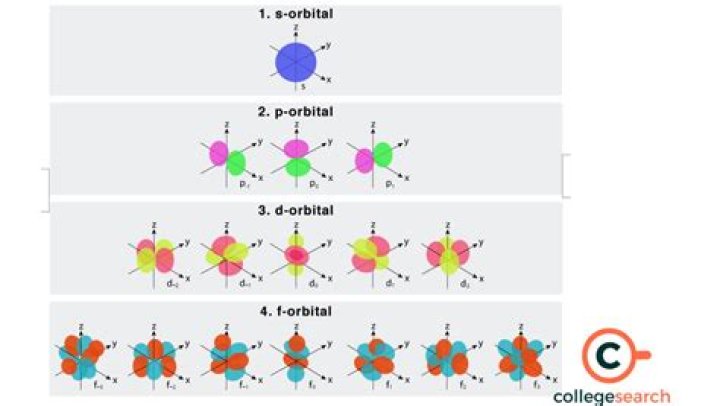
The name transition metal refers to the position in the periodic table of elements. The transition elements represent the successive addition of electrons to the d atomic orbitals of the atoms.
Transition Metals. Inner Transition Metals.
| Group*** Period | 3 |
|---|---|
| 11 Na 22.99 | |
| 12 Mg 24.31 | |
| 13 Al 26.98 | |
| 14 Si 28.09 |
How many transition elements are there?
38 elementsWhy does the D block start at 3?
At the third level (n = 3), l jumps again to 2 (or d) plus the l = 0 and 1 allowed orbitals, and so on. And since the d orbitals correspond to l = 2, n must be 3 for the first d subshell to form (and f is at l =3, so n = 4 is the first shell for an f orbital).What is lanthanoid series?
lanthanide series. lanthanide series, a series of metallic elements, included in the rare-earth metals , in Group 3 of the periodic table . Members of the series are often called lanthanides, although lanthanum (atomic number 57) is not always considered a member of the series.What do you mean by transition elements?
The transition elements are those elements having a partially filled d or f subshell in any common oxidation state. The term "transition elements" most commonly refers to the d-block transition elements.Why are transition metals not reactive?
Transition elements are less reactive because they lies between s-block and p-block which are more reactive in nature , also when it comes to transition elements the melting point of these first increases to maximum and then gradually decreases towards the end of series.What are the characteristics of transition elements?
Properties of transition elements include:- have large charge/radius ratio;
- are hard and have high densities;
- have high melting and boiling points;
- form compounds which are often paramagnetic;
- show variable oxidation states;
- form coloured ions and compounds;
- form compounds with profound catalytic activity;